Shopping cart
(0 items)

Your shopping cart is empty

The coffee plant, a botanical speciality

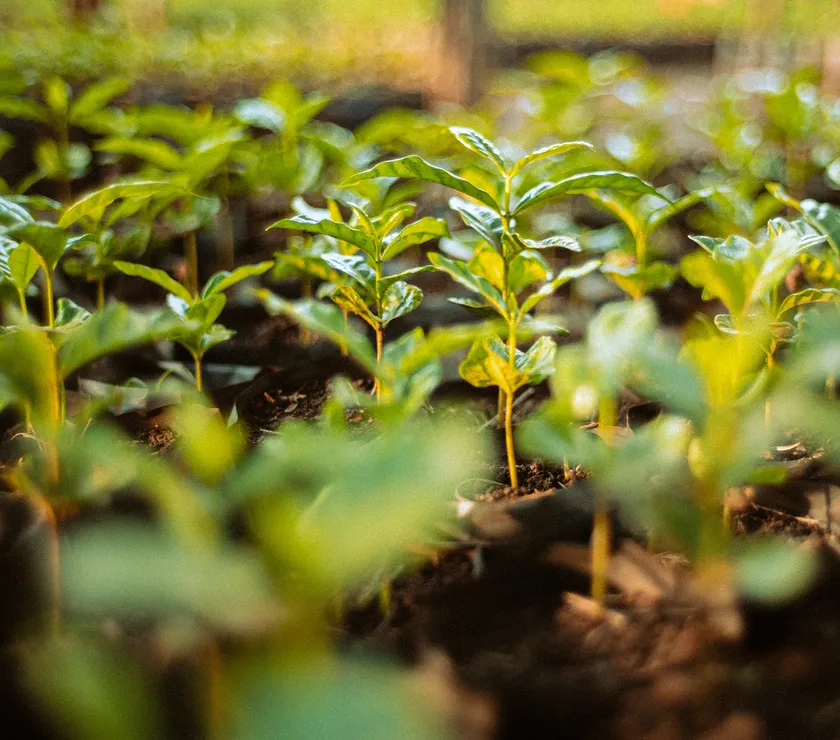
Coffee plants, which are actually categorised botanically as trees, are grown around the equator between 23° north and 25° south latitude. Cultivation and care are extremely complex, as Coffea is a very sensitive plant that does not tolerate extreme conditions. The coffee plant requires regular rainfall and temperatures of 17 to 23 °C. The trees and bushes in the plantations are initially planted 2 to 4 metres apart and only begin to bear fruit after 3 years. Their height is artificially kept at 2.5 to 3 metres to facilitate care and harvesting; they would otherwise grow to a height of 10 to 15 metres.
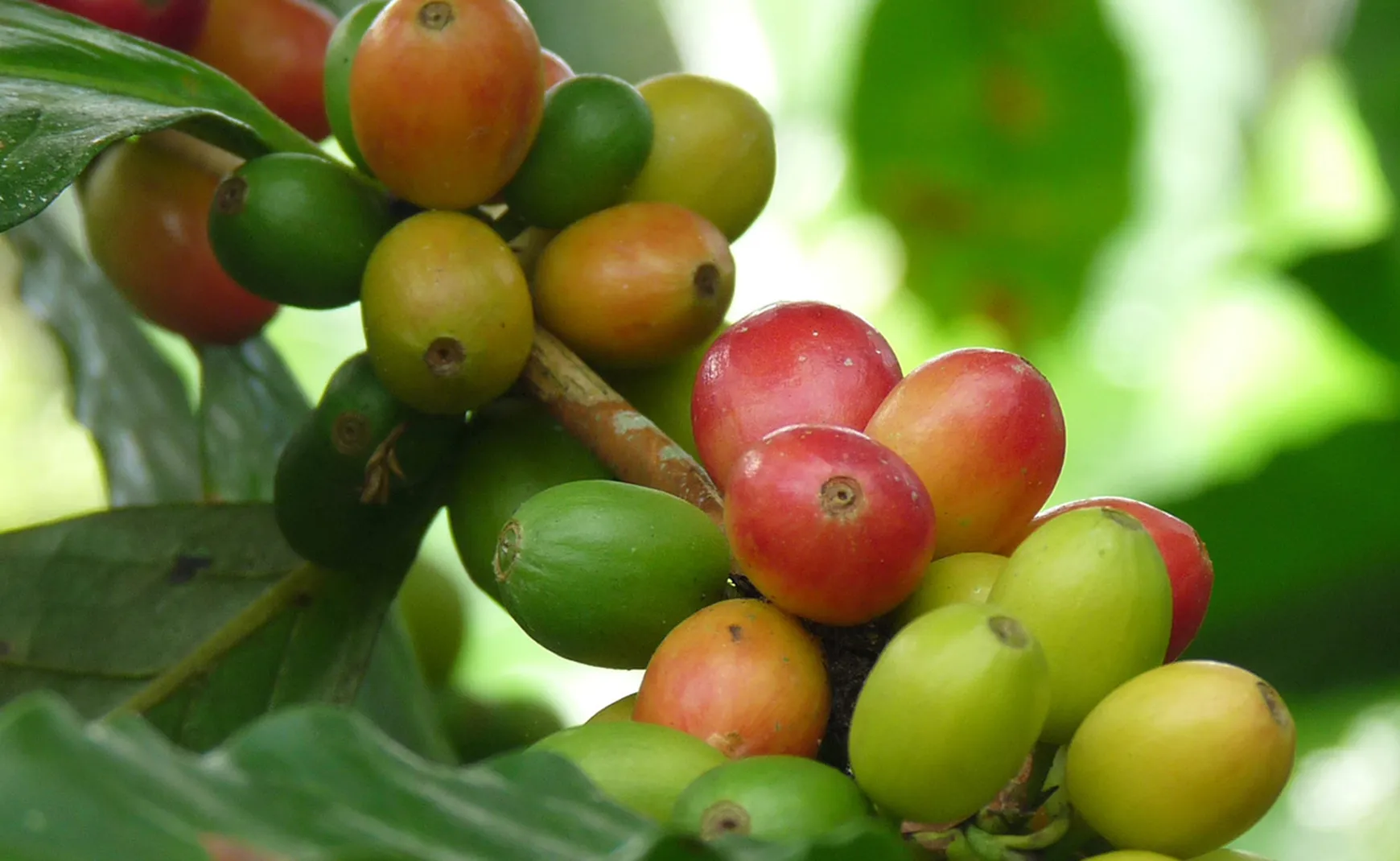
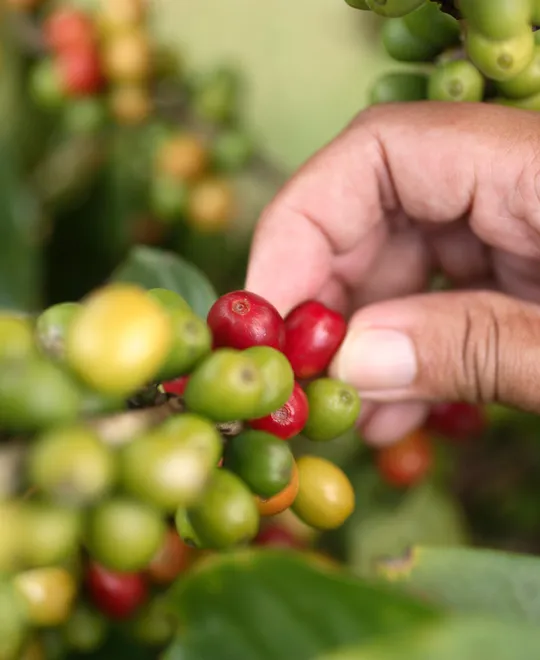
The coffee cherries are ripe when they are dark red in colour and the harvest has to be repeated several times as not all the cherries are ripe at the same time. All stages of development, from the white blossom to the green, unripe coffee cherry to the ripe red cherry, often hang on a single branch at the same time. The fruits of the coffee tree take eight to ten months to fully ripen, during which time they store their complex flavours. One of the special features of the coffee tree is that it bears flowers and ripe coffee cherries all year round.

Origin & cultivation

Coffee is native to the Ethiopian highlands in East Africa. Of the approximately 80 different types of coffee, two plant species are of global importance. These account for 99% of world production.

Arabica

Coffea arabica - It originates from the Ethiopian region and was first cultivated in what is now Yemen. As the finest of all beans, it accounts for between 70 and 75 % of global production. It thrives best in tropical areas between 800 and 2,200 metres above sea level. It is more sensitive than the Robusta variety and requires regular watering. It does not tolerate prolonged dry periods, continuous rain, cold and strong winds at all. It prefers shade trees and thrives best at around 20 °C. The plant is native to Central and South America and the east coast of Africa.

Robusta

Coffea canephora - better known as Robusta - was first found in the Congo in the 18th century and owes its name to its greater resistance to diseases and pests. It is faster-growing and has a higher tolerance for temperature fluctuations than Arabica. Its global production share is around 30 %. It has an earthy and rough flavour and grows in lower cultivation areas from sea level up to 800 m above sea level. It is native to West Africa and the tropical regions of Asia.